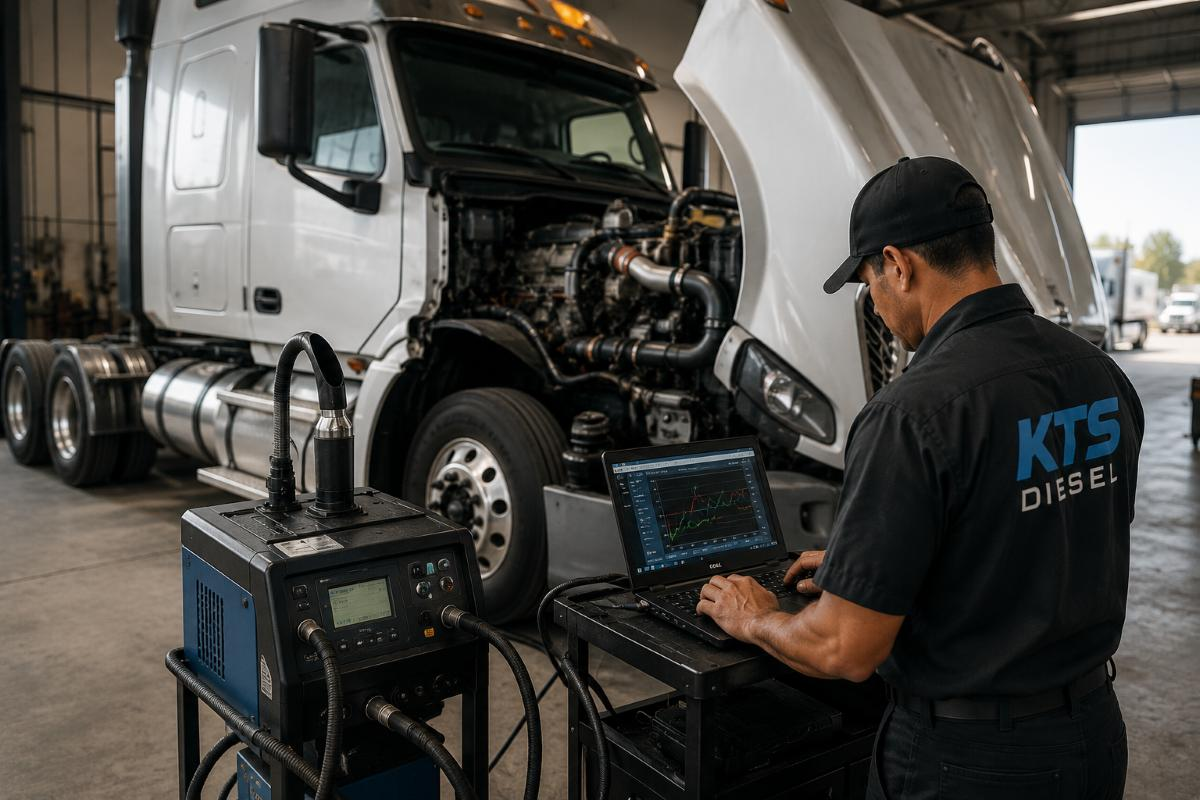
Through advanced filtration technology and high - quality materials, we ensure that our DPFs meet the most stringent environmental standards helping to improve air quality and protect the environment.
Through advanced filtration technology and high - quality materials, we ensure that our DPFs meet the most stringent environmental standards helping to improve air quality and protect the environment.

Why Exhaust Backpressure Matters
Diesel engines need a clear path for exhaust gases to leave the cylinders. When the exhaust system creates too much resistance, exhaust backpressure increases. This can affect engine operation, fuel use, and overall vehicle performance.
For fleet operators across the United States and Canada, the impact can go beyond the engine. Reduced power, repeated service visits, and unexpected downtime can disrupt delivery schedules and raise operating costs.
Backpressure is not always a problem. Every exhaust system has some resistance, and the engine and aftertreatment system are designed to operate within specific limits. The concern is excessive backpressure—especially when it results from a restricted or damaged component.
Understanding the cause helps maintenance teams choose the right repair instead of replacing parts without a clear diagnosis.
1. What Causes Exhaust Backpressure to Increase?
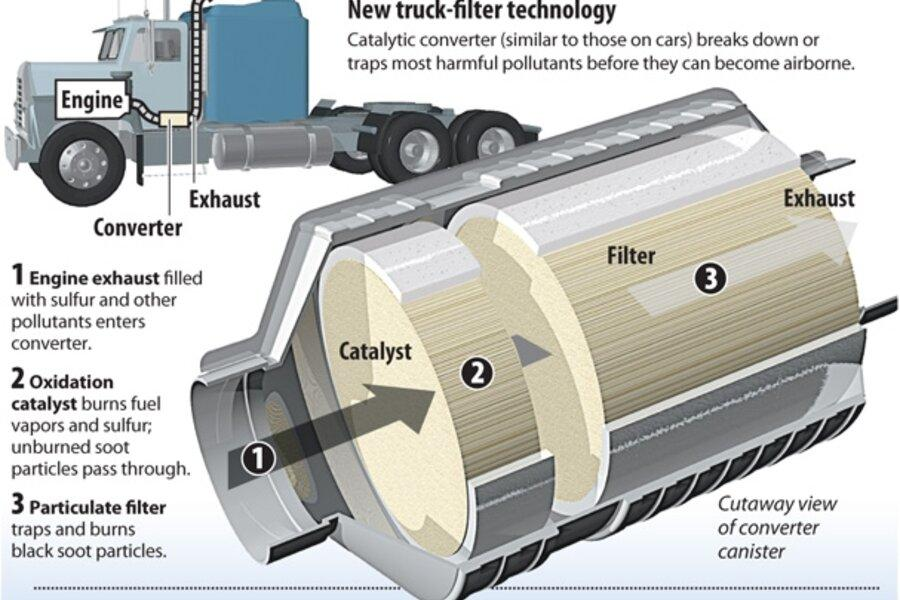
As exhaust gas moves through the engine and aftertreatment system, it passes through components such as the turbocharger, diesel oxidation catalyst (DOC), DPF, and selective catalytic reduction (SCR) system, depending on the vehicle design.
Each component contributes some resistance. If a component becomes restricted, the pressure needed to move exhaust through the system can rise.
Common causes include:
· DPF soot loading: The filter captures soot from diesel exhaust. As soot builds up, exhaust flow becomes more restricted until regeneration removes the combustible soot under suitable conditions.
· Ash accumulation: Ash from engine oil additives and other noncombustible material remains in the filter after regeneration. Over time, it can reduce the available flow area.
· Failed or interrupted regeneration: If the system cannot complete regeneration as intended, soot may continue to accumulate.
· Engine or sensor faults: Injector problems, air-system faults, or inaccurate pressure and temperature readings can contribute to excess soot or prevent correct aftertreatment control.
Other exhaust restrictions or damage: The complete exhaust system may need inspection when measured pressure does not match expected operating conditions.
The important point is that a restricted DPF may be the main fault—or a sign of another problem. Correct diagnosis should come before deciding on cleaning or replacement.
2. How Can High Backpressure Affect Engine Performance?
The effects depend on the engine design, operating load, and severity of the restriction. On turbocharged diesel engines, excessive exhaust restriction can interfere with the conditions needed for normal engine operation and turbocharger performance.
Drivers and maintenance teams may notice several warning signs:
Reduced engine power. The vehicle may feel less responsive, struggle under load, or enter a reduced-power mode if the control system detects a serious fault.
Higher fuel consumption. Fuel use may rise when the engine and aftertreatment system cannot operate as intended. Repeated or unsuccessful regeneration attempts can also consume additional fuel.
Frequent regeneration requests. Repeated requests may indicate excessive soot loading, an unsuitable duty cycle, or a fault that prevents normal regeneration.
Warning lights or fault codes. DPF, check-engine, or other aftertreatment warnings may signal a restriction or related sensor or engine problem.
These symptoms are useful clues, but none proves by itself that backpressure is the root cause. Technicians should check the vehicle's diagnostic information and compare readings with the manufacturer's specifications.
3. How Does DPF Design Help Control Backpressure?
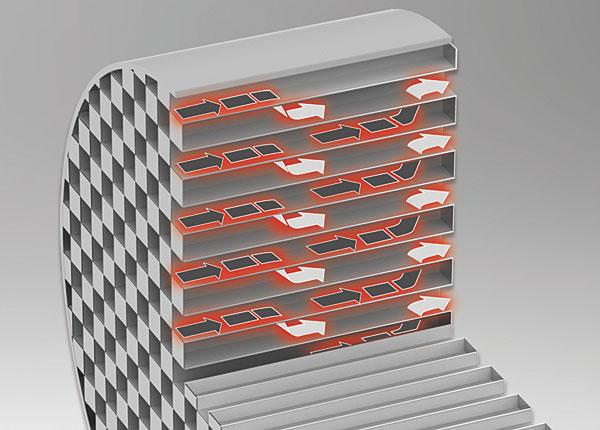
A diesel particulate filter must capture particulate matter while allowing exhaust gas to pass through its porous structure.
Inside a typical wall-flow DPF, alternate channel ends are plugged. Exhaust gas passes through porous ceramic walls, which trap soot before the cleaned gas continues downstream.
Engineers balance several design factors to achieve the required filtration and flow performance, including:
· Ceramic material, such as cordierite or silicon carbide (SiC).
· Cell density, wall thickness, and porosity.
· Filter size and thermal characteristics.
Required filtration efficiency and pressure-drop limits.
A well-designed filter must meet the performance requirements for its intended application. Strong filtration alone is not enough if the filter creates excessive restriction.
Flow and pressure-drop testing helps verify performance under defined test conditions. The results must be evaluated against the specifications for the product and application. A single test does not prove every aspect of quality or durability.
4. Diagnose the Cause Before Replacing Parts
A structured diagnostic process can help prevent repeat failures and unnecessary expense.
A qualified technician should:
1. Review fault codes and warning history. Identify related engine, sensor, and aftertreatment faults.
2. Check differential pressure readings. Compare measured values with manufacturer specifications under the required test conditions.
3. Review soot loading and regeneration history. Determine whether regeneration has been interrupted or repeatedly requested.
4. Inspect the wider system. Check relevant pressure and temperature sensors, exhaust connections, and possible engine causes of excess soot.
Select the correct action. Depending on the findings, the solution may involve an approved regeneration, professional DPF cleaning, repair, or replacement.
Remember: regeneration can burn soot, but it does not remove accumulated ash. Cleaning and replacement decisions should follow the applicable service requirements.
Do not assume that driving at highway speed will clear every restriction. Follow the vehicle manufacturer's instructions, especially when warnings persist or power loss becomes severe.
5. The Business Value of Managing Backpressure
For aftermarket distributors, accurate application matching and reliable technical support help reduce incorrect replacements, returns, and warranty concerns.
For OEM engineers, verified flow performance and application-specific validation support reliable integration of the DPF into the full aftertreatment system.
The goal is not simply to reduce backpressure as much as possible. It is to maintain exhaust flow within the correct design limits while meeting emissions, durability, and operating requirements.
Protect Performance With the Right Aftertreatment Solution
Exhaust backpressure is an important indicator of diesel engine and aftertreatment health. When pressure rises beyond the expected range, early diagnosis can help identify the restriction, protect vehicle availability, and avoid repeat repairs.
A dependable solution starts with accurate measurements, correct application matching, and an understanding of the full exhaust system.