
Through advanced filtration technology and high - quality materials, we ensure that our DPFs meet the most stringent environmental standards helping to improve air quality and protect the environment.
Through advanced filtration technology and high - quality materials, we ensure that our DPFs meet the most stringent environmental standards helping to improve air quality and protect the environment.

Every fleet manager has heard the same complaint:
"The truck just had a regeneration, but the DPF is plugged again."
A clogged Diesel Particulate Filter (DPF) is rarely the real problem.
In most cases, it is a symptom of another issue somewhere in the engine or aftertreatment system.
Replacing the DPF without finding the root cause often leads to:
More downtime
Repeat repairs
Higher maintenance costs
Customer complaints
Shorter DPF life
Understanding why a DPF keeps clogging helps fleets reduce operating costs and helps distributors recommend the correct replacement parts the first time.
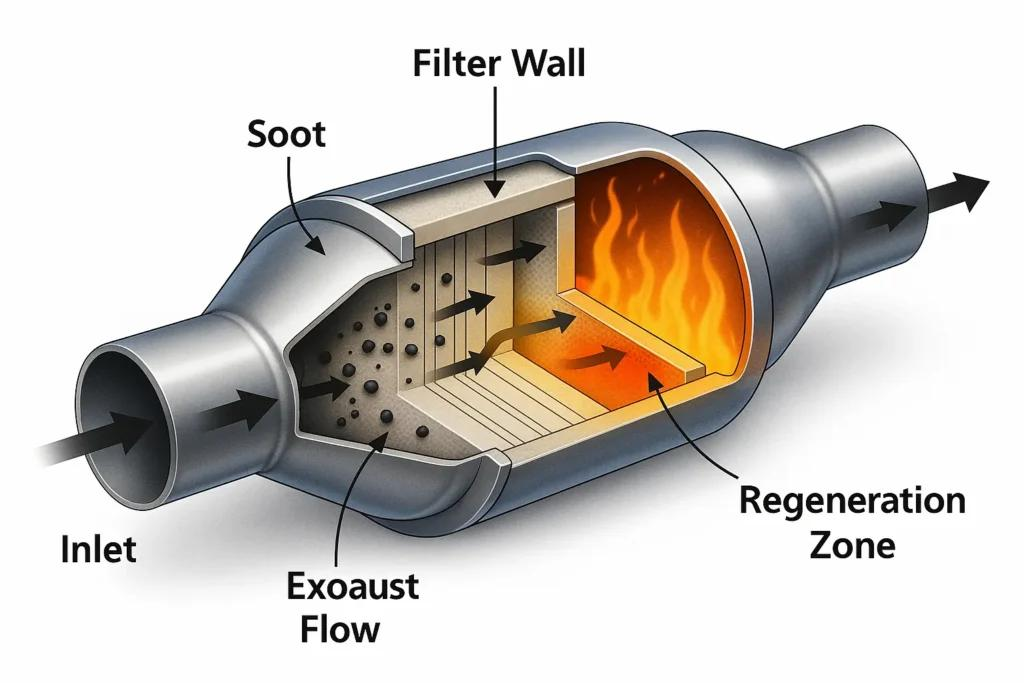
A Diesel Particulate Filter captures soot particles produced during diesel combustion.
As soot builds up, exhaust restriction gradually increases.
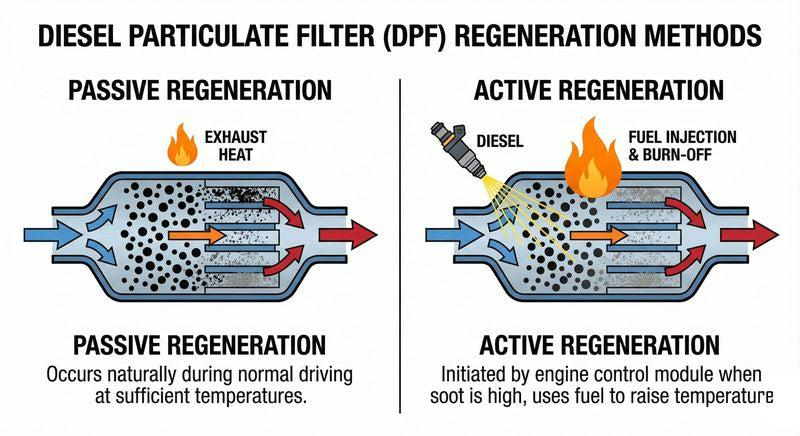
To keep the filter working, the trapped soot must be burned into a small amount of ash through DPF regeneration.
There are two common regeneration methods:
Happens naturally
Requires high exhaust temperature
Works during highway driving
Triggered by the engine control module (ECM)
Additional fuel raises exhaust temperature
Burns accumulated soot when passive regeneration is not enough
If regeneration cannot remove soot efficiently, the filter eventually becomes restricted.
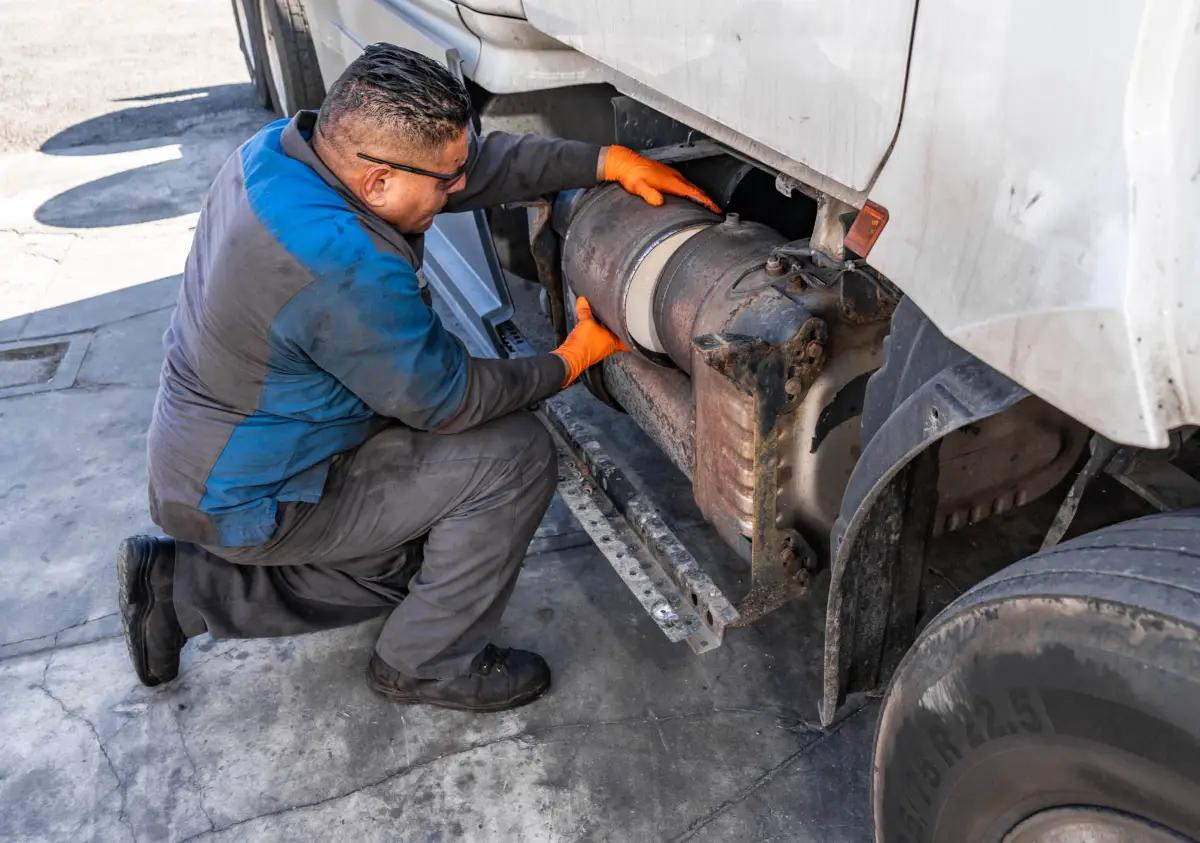
One of the most common reasons for repeated DPF plugging is low exhaust temperature.
Typical examples include:
City delivery trucks
Refuse trucks
Utility vehicles
School buses
Vehicles with long idle periods
These duty cycles never allow the exhaust to reach the temperature needed for effective regeneration.
Rapid soot accumulation
Frequent active regenerations
Higher fuel consumption
Faster DPF loading
A healthy engine should produce relatively low soot emissions.
Excess soot usually points to another engine problem.
Common causes include:
Worn fuel injectors
Turbocharger problems
Dirty air filters
EGR system faults
Incorrect fuel-air ratio
Even a new DPF cannot compensate for an engine that produces excessive soot.
Regeneration does not always complete successfully.
It may stop because:
Driver shuts off the engine
Vehicle returns to low-speed operation
Fault codes interrupt regeneration
Exhaust temperature never reaches target
Each failed regeneration leaves additional soot inside the filter.
After several incomplete cycles, plugging occurs quickly.
Many operators confuse ash with soot.
Soot burns away.
Ash does not.
Ash comes from:
Engine oil additives
Metal wear particles
Fuel impurities
Over time, ash permanently occupies filter volume.
Eventually, the DPF reaches the end of its service capacity.
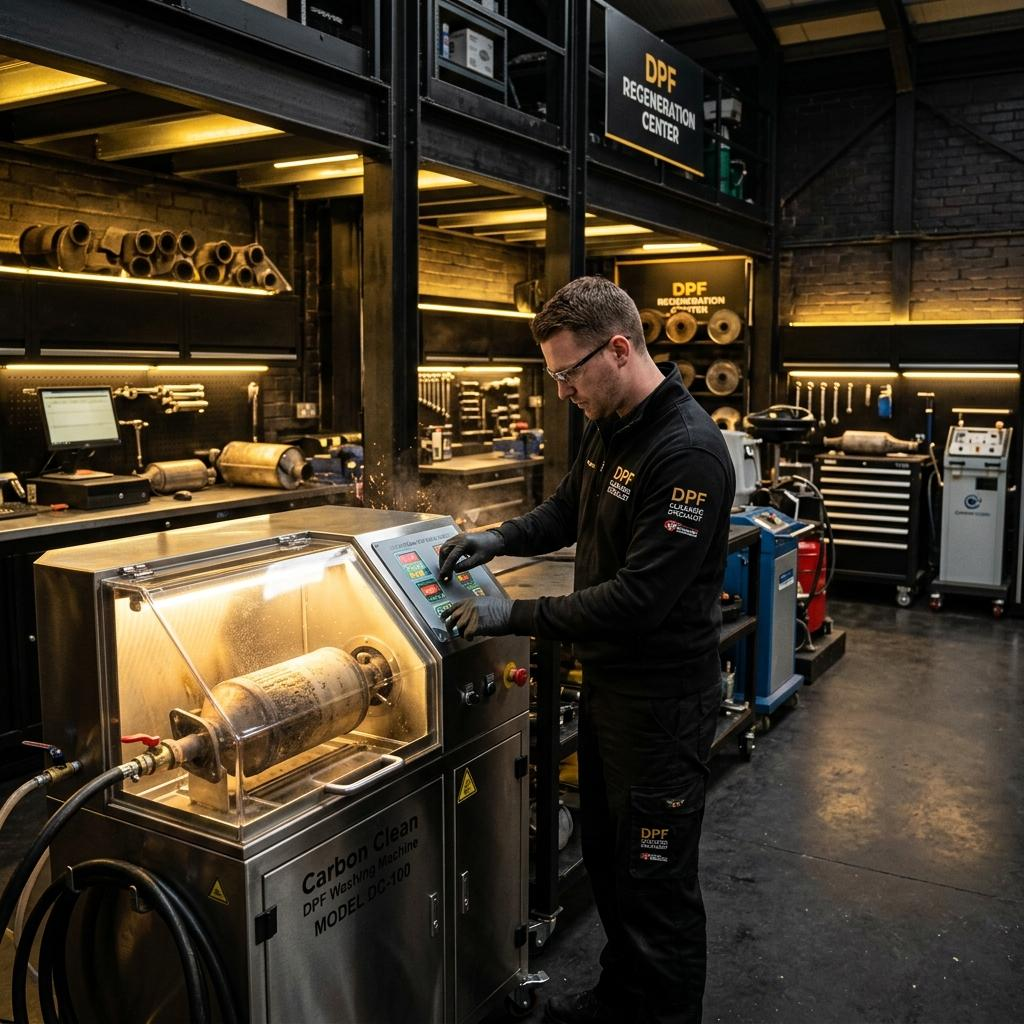
Unlike soot, ash requires professional cleaning or filter replacement.
Modern aftertreatment systems depend heavily on sensor accuracy.
Important sensors include:
Differential pressure sensor
Exhaust temperature sensors
NOx sensors
Oxygen sensors (some systems)
Incorrect sensor readings can cause:
Missed regenerations
Unnecessary regenerations
Incorrect soot calculations
False DPF fault codes
Sometimes the filter is healthy—the sensor is not.
Aftermarket DPF quality varies significantly.
Common problems include:
Incorrect catalyst coating
Poor substrate quality
Wrong cell density
Inaccurate OE cross-reference
Dimensional differences
These issues can reduce regeneration efficiency and create installation problems.
For distributors and fleet maintenance teams, choosing a replacement DPF with validated OE fitment helps reduce unnecessary returns and repeat repairs.
Small maintenance issues often become expensive DPF failures.
Examples include:
Ignoring warning lights
Skipping engine diagnostics
Delaying sensor replacement
Using incorrect engine oil
Missing scheduled DPF cleaning
Routine preventive maintenance usually costs far less than emergency downtime.
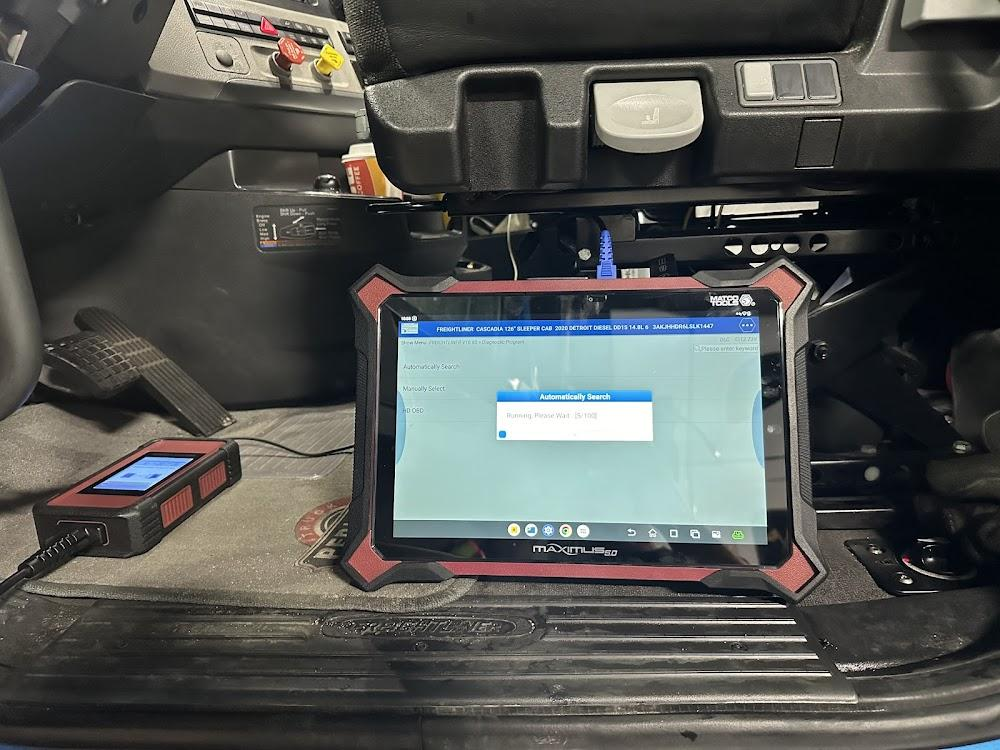
A proactive maintenance program can significantly reduce DPF-related downtime.
✔ Monitor differential pressure trends
✔ Complete regeneration cycles whenever possible
✔ Repair engine faults promptly
✔ Use low-ash engine oil approved by the engine manufacturer
✔ Clean DPFs at recommended service intervals
✔ Verify OE fitment before installing replacement filters
✔ Replace damaged sensors before replacing the DPF
When selecting a replacement DPF, purchase price is only one part of the equation.
Many fleets focus on the total cost of ownership, including:
Reliable fitment
Consistent regeneration performance
Durable substrate materials
Accurate OE cross-references
Complete installation hardware
Stable product availability
Technical support
These factors can reduce installation time, lower return rates, and improve vehicle uptime.
A DPF that keeps clogging is usually not the root problem.
In most cases, the filter is responding to poor engine performance, incomplete regeneration, excessive ash accumulation, faulty sensors, or unsuitable operating conditions.
Finding and correcting the underlying cause helps fleets extend DPF life, reduce maintenance costs, and keep trucks on the road.
For distributors and OEM service organizations, selecting replacement DPFs with proven fitment accuracy and consistent manufacturing quality can also reduce warranty claims and improve customer satisfaction.


