
Through advanced filtration technology and high - quality materials, we ensure that our DPFs meet the most stringent environmental standards helping to improve air quality and protect the environment.
Through advanced filtration technology and high - quality materials, we ensure that our DPFs meet the most stringent environmental standards helping to improve air quality and protect the environment.

Modern diesel engines depend on the Diesel Particulate Filter (DPF) to capture harmful soot before it leaves the exhaust system. Over time, however, every DPF fills with soot and ash. When the filter becomes overloaded, engine performance drops, fuel consumption increases, and expensive downtime can follow.
Understanding how to clean a DPF correctly is essential for fleet managers, truck repair facilities, aftermarket distributors, and OEM engineers. Proper cleaning restores airflow, reduces replacement costs, and helps maintain compliance with EPA and Canadian emissions regulations.
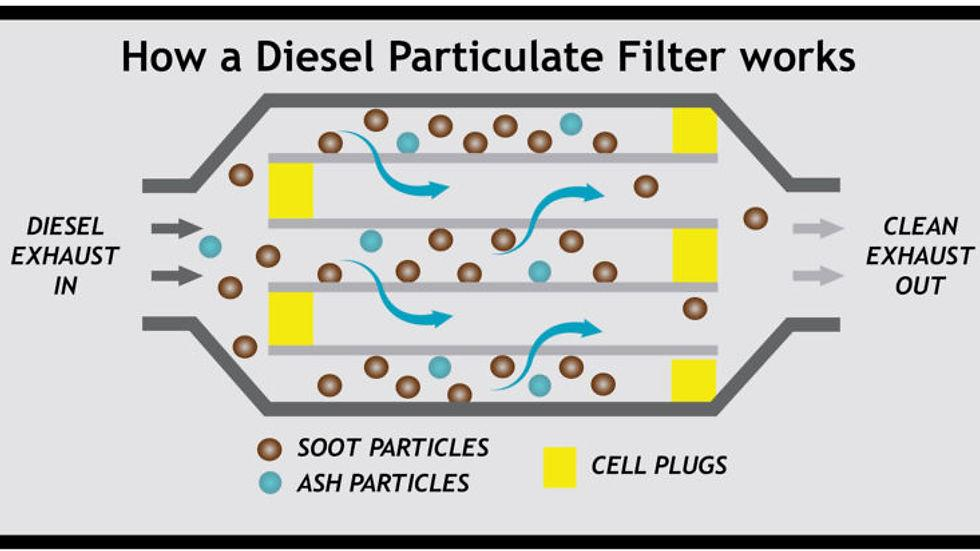
A DPF traps microscopic carbon particles produced during diesel combustion.
During normal operation, high exhaust temperatures burn soot into carbon dioxide through a process called regeneration.
The problem is that ash does not burn away.
Ash comes from:
· Engine oil additives
· Fuel additives
· Metal wear particles
· Lubricant contaminants
Unlike soot, ash gradually fills the filter channels until airflow becomes restricted.
Soot | Ash |
Carbon particles | Mineral residue |
Burned during regeneration | Cannot be burned |
Temporary | Permanent accumulation |
Causes active regeneration | Requires physical cleaning |
Once excessive ash accumulates, regeneration alone can no longer restore the DPF.
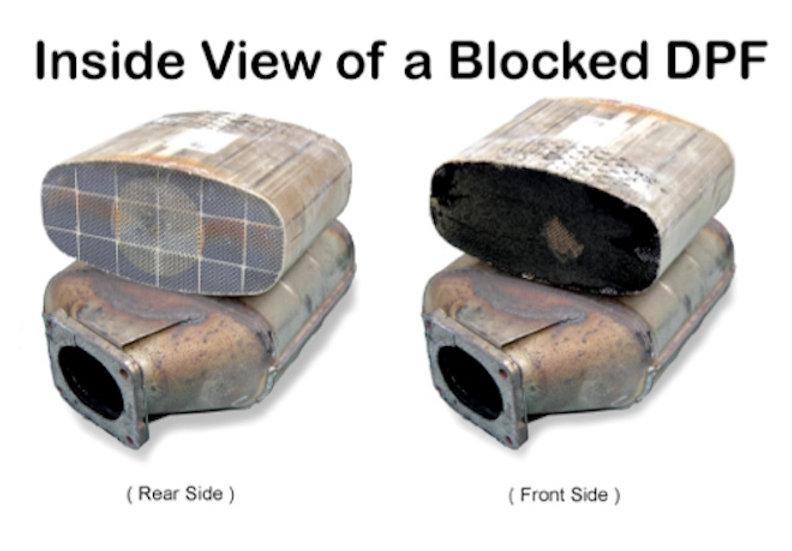
Ignoring early warning signs often leads to costly repairs.
Common indicators include:
· Increased exhaust backpressure
· Frequent active regenerations
· Reduced fuel economy
· Engine derating
· Loss of engine power
· Higher exhaust temperatures
· DPF warning light
· Check Engine Light (CEL)
Fleet maintenance teams should monitor these symptoms before complete blockage occurs.
Passive regeneration happens automatically while driving under sustained highway loads.
Advantages:
· No service interruption
· Lowest operating cost
· Minimal driver involvement
Limitations:
· Requires sufficient exhaust temperature
· Ineffective for low-load applications
· Cannot remove ash
Ideal for:
· Long-haul trucking
· Highway fleets
During active regeneration, the engine management system raises exhaust temperature by injecting additional fuel.
Benefits:
· Burns accumulated soot
· Restores filtration efficiency
· Automatic on many modern engines
Limitations:
· Consumes additional fuel
· Cannot eliminate ash
· Excessive interruptions reduce effectiveness
Forced regeneration is performed using diagnostic equipment while the vehicle is stationary.
Recommended when:
· Automatic regeneration fails
· Excessive soot loading occurs
· DPF warning remains active
Important:
Forced regeneration should only be performed after confirming that no engine faults exist.
If injector problems, turbocharger failures, or EGR issues remain unresolved, regeneration may fail again.
Professional cleaning is the only method capable of removing accumulated ash.
Most commercial service centers combine:
· Thermal baking
· Pneumatic air cleaning
· Vacuum extraction
· Flow testing
· Backpressure verification
This process restores airflow much closer to original specifications.
Professional cleaning is generally recommended whenever ash loading exceeds acceptable limits.
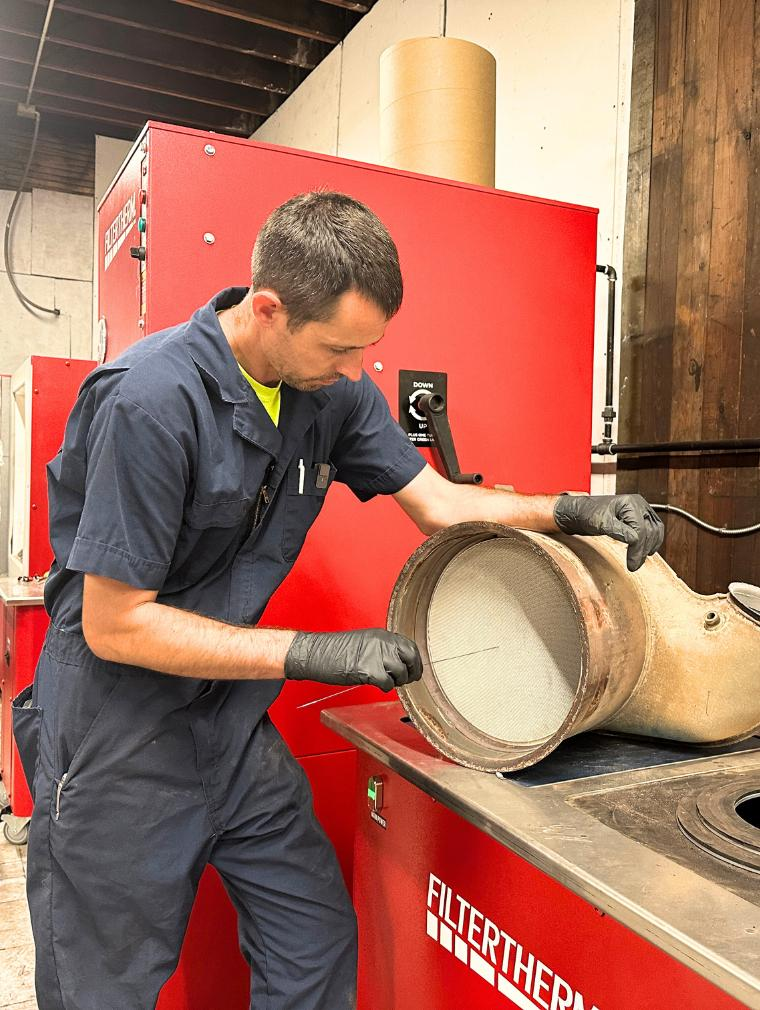
One of the biggest misconceptions is that every blocked DPF can simply be cleaned.
Some filters have permanent damage.
Examples include:
· Melted substrate
· Thermal cracking
· Broken ceramic cells
· Oil contamination
· Coolant contamination
· Mechanical impact damage
If structural damage exists, replacement is usually the safer and more economical solution.
Professional service providers typically inspect several critical parameters before recommending cleaning.
These include:
· Differential pressure
· Visual substrate inspection
· Endoscope examination
· Weight measurement
· Flow testing
· Temperature history
· ECU fault codes
Only after this evaluation can technicians determine whether cleaning is appropriate.
Cleaning frequency depends on operating conditions.
Fleet operators can significantly extend service intervals by following several maintenance practices.
Repair oil consumption problems promptly.
Address injector faults before soot production increases.
Maintain proper turbocharger performance.
Low-ash engine oils reduce long-term ash accumulation inside the filter.
Low exhaust temperatures prevent complete regeneration.
Highway operation periodically allows passive regeneration to occur naturally.
Routine pressure measurements help identify blockage before severe restriction develops.
Most heavy-duty applications recommend periodic DPF inspection based on operating hours or mileage rather than waiting for failure.
A Diesel Particulate Filter is designed to remove soot—not to last forever without maintenance.
While regeneration removes soot during normal operation, ash continues to accumulate throughout the filter's life. Once ash reaches critical levels, professional cleaning becomes necessary to restore airflow and maintain system performance.
For fleets, distributors, and service providers, understanding when to regenerate, when to clean, and when to replace a DPF is key to reducing operating costs, maximizing uptime, and protecting long-term emissions system reliability.


