
Through advanced filtration technology and high - quality materials, we ensure that our DPFs meet the most stringent environmental standards helping to improve air quality and protect the environment.
Through advanced filtration technology and high - quality materials, we ensure that our DPFs meet the most stringent environmental standards helping to improve air quality and protect the environment.

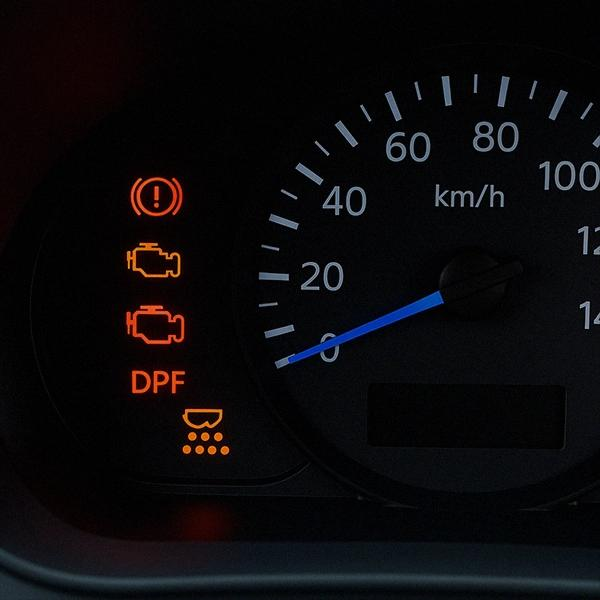
A Diesel Particulate Filter (DPF) warning light is more than a dashboard reminder. It is an early signal that your aftertreatment system is no longer operating as designed.
Ignoring the warning can lead to:
· Reduced engine power
· Higher fuel consumption
· Forced derates
· Expensive DPF replacement
· Vehicle downtime
For commercial fleets, every hour of downtime affects productivity and operating costs. Understanding what each warning means allows maintenance teams to act before a minor issue becomes a major repair.
The DPF collects soot generated during diesel combustion.
As soot accumulates, engine sensors monitor:
· Differential pressure across the filter
· Exhaust gas temperature
· Regeneration status
· Engine operating conditions
When soot loading reaches certain thresholds, the Engine Control Module (ECM) activates different dashboard warning lights.
Think of the warning light as the truck saying:
"My filter is getting full. Please help me clean it before it becomes blocked."
Warning | Meaning | Recommended Action |
DPF Light | Soot loading is increasing | Drive to complete regeneration |
Flashing DPF Light | Regeneration has been interrupted | Perform parked regeneration |
Check Engine Light | Sensor or emissions fault detected | Diagnose fault codes |
Engine Derate Warning | Severe restriction detected | Immediate service required |
High Exhaust Temperature Light | Active regeneration in progress | Continue driving safely |
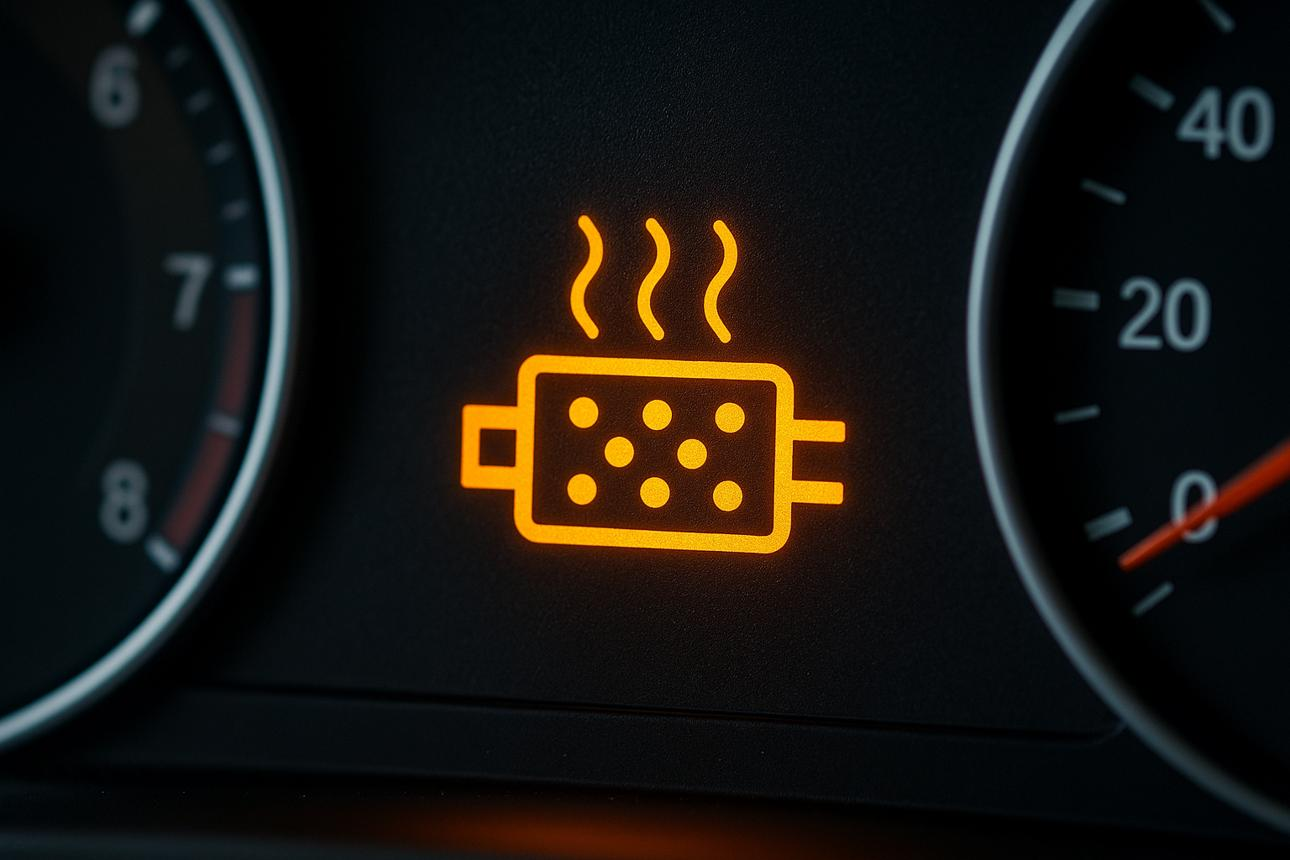
Several conditions can trigger the warning.
This is the most common cause.
Frequent stop-and-go driving prevents exhaust temperatures from reaching the level needed for passive regeneration.
Common applications include:
· Urban delivery trucks
· Garbage trucks
· School buses
· Utility vehicles
If active regeneration is interrupted repeatedly, soot continues to build.
Typical reasons include:
· Engine shut down too early
· Short operating cycles
· Low exhaust temperature
· Driver interruption
The ECM depends on accurate sensor data.
Common failures include:
· Differential pressure sensor
· Temperature sensor
· NOx sensor
· Wiring damage
Incorrect sensor readings may trigger warning lights even when the DPF itself is healthy.
Unlike soot, ash cannot be burned away.
Over thousands of operating hours, ash from engine oil additives gradually fills the filter.
Eventually:
· Backpressure increases
· Regeneration becomes less effective
· Cleaning or replacement becomes necessary
Many operators continue driving after the first warning appears.
Unfortunately, the problem rarely goes away on its own.
Ignoring the warning may result in:
· Reduced fuel economy
· Increased exhaust restriction
· Frequent regeneration
· Engine derate
· Turbocharger stress
· Higher exhaust temperatures
· Premature DPF failure
In severe cases, replacing the DPF can cost significantly more than performing scheduled maintenance.
Warning Stage | Recommended Response |
First DPF Light | Continue highway driving to complete regeneration |
Flashing DPF Light | Perform parked regeneration immediately |
Check Engine Light | Scan diagnostic trouble codes (DTCs) |
Engine Derate | Stop operation and inspect the aftertreatment system |
Repeated Warnings | Check sensors, injector operation, turbocharger, and DPF condition |
Prompt action often prevents costly downtime.
Good maintenance practices dramatically reduce warning events.
✔ Follow recommended regeneration procedures
✔ Use low-ash engine oil
✔ Avoid unnecessary engine idling
✔ Inspect differential pressure hoses
✔ Monitor exhaust temperatures
✔ Schedule professional DPF cleaning
✔ Replace damaged sensors promptly
✔ Verify correct DPF fitment during replacement
Preventive maintenance is almost always less expensive than emergency repairs.
Many recurring warning lights are caused not by engine problems, but by poor-quality replacement components.
Improper fitment can lead to:
· Exhaust leaks
· Incorrect pressure readings
· Sensor installation issues
· Reduced regeneration efficiency
· Repeated dashboard warnings
For distributors and fleet maintenance teams, choosing OE-validated replacement DPFs helps reduce installation problems and warranty claims.
Reliable fitment also minimizes vehicle downtime and improves customer satisfaction.
A DPF warning light is an early maintenance alert—not something to ignore.
By understanding the warning stages, completing regeneration correctly, and maintaining the aftertreatment system, fleets can reduce downtime, extend DPF service life, and lower overall operating costs.
For aftermarket distributors and OEM partners, supplying accurately engineered, OE-fit replacement DPFs with validated fitment helps customers avoid repeat failures, reduce warranty claims, and keep commercial vehicles operating efficiently.


