
Through advanced filtration technology and high - quality materials, we ensure that our DPFs meet the most stringent environmental standards helping to improve air quality and protect the environment.
Through advanced filtration technology and high - quality materials, we ensure that our DPFs meet the most stringent environmental standards helping to improve air quality and protect the environment.

Modern diesel fleets rely on advanced exhaust aftertreatment systems to meet emissions regulations across the U.S. and Canada. At the center of this system is the Diesel Particulate Filter (DPF), working alongside the catalytic converter to reduce harmful emissions.
For fleet buyers, understanding how passive and active DPF regeneration works is not just technical knowledge — it directly impacts uptime, maintenance costs, fuel efficiency, and compliance.
Let’s break it down in a clear, practical way.

The exhaust system in most heavy-duty diesel trucks uses several components working together:
Diesel Oxidation Catalyst (DOC) – Often compared to a traditional catalytic converter. It converts carbon monoxide and hydrocarbons into less harmful gases and generates heat needed for regeneration.
Diesel Particulate Filter (DPF) – Captures soot particles before they exit the exhaust.
Selective Catalytic Reduction (SCR) – Reduces nitrogen oxide (NOx) emissions using DEF fluid.
Think of the DOC as the heat and chemical reaction starter, while the DPF acts as the soot storage and filtration device. Over time, soot builds up inside the DPF. To prevent clogging, the system performs regeneration, which burns off the soot.
There are two main types: passive and active regeneration.
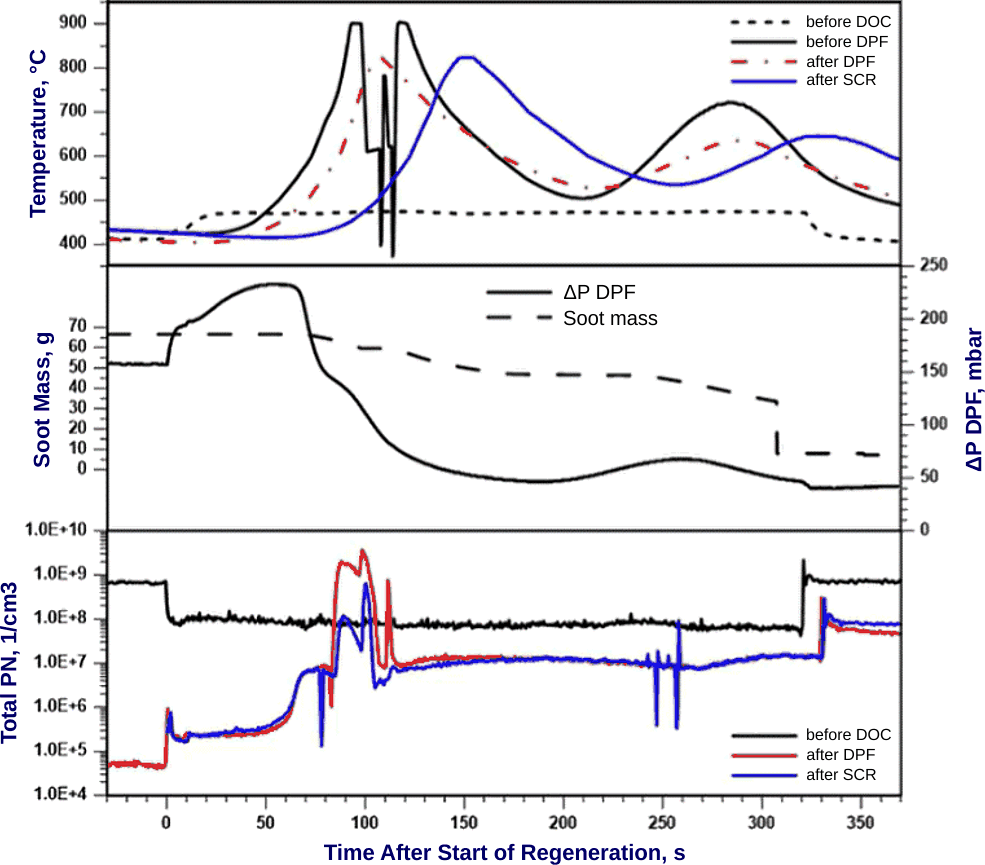
Passive regeneration occurs automatically during normal vehicle operation. It happens when exhaust temperatures are naturally high enough to burn soot inside the filter.
How Passive Regeneration Works
The engine produces exhaust gas during operation.
The DOC helps increase exhaust temperature through oxidation reactions.
When temperatures typically reach 475–650°F (245–345°C), soot begins to oxidize.
The soot converts into carbon dioxide and exits the system.
When Passive Regeneration Happens Most
Passive regeneration is the most cost-effective cleaning method because:
No additional fuel injection is required
No driver intervention is needed
Less downtime
Reduced thermal stress on components
Fleets that run mostly highway routes usually experience longer DPF service intervals.

Active regeneration occurs when normal driving conditions do not produce enough heat to clean the DPF.
This is common in:
Urban delivery fleets
School buses
Refuse trucks
Idle-heavy vocational trucks
Cold climate stop-and-go operations
How Active Regeneration Works
Sensors monitor soot accumulation inside the DPF.
When soot reaches a programmed threshold, the engine control module triggers regeneration.
Extra fuel is injected either into the exhaust stream or combustion cycle.
The DOC converts this fuel into heat.
Exhaust temperatures rise to 1,000°F (540°C) or higher, burning soot rapidly.
Types of Active Regeneration
Active regeneration can lead to:
Increased fuel consumption
Temporary reduction in engine power
Required driver training
Potential downtime if parked regeneration is needed
Fleet managers should monitor for early warning signs such as:
Frequent regeneration cycles
Dashboard regeneration warning lights
Increased fuel consumption
Loss of engine power
Rising exhaust backpressure readings
Early action can prevent expensive DPF replacements.
When evaluating DPF systems or suppliers, consider asking:
Does the system optimize passive regeneration performance?
How durable is the catalytic coating?
Are cold-climate operating tests available?
What driver training resources are included?
What is the recommended cleaning interval under Canadian duty cycles?
Passive and active regeneration are both essential functions in modern diesel emissions control systems. However, fleets that maximize passive regeneration typically achieve better uptime, lower operating costs, and longer component life.
Understanding how the catalytic converter supports regeneration allows fleet buyers to make smarter purchasing and maintenance decisions.


