
Through advanced filtration technology and high - quality materials, we ensure that our DPFs meet the most stringent environmental standards helping to improve air quality and protect the environment.
Through advanced filtration technology and high - quality materials, we ensure that our DPFs meet the most stringent environmental standards helping to improve air quality and protect the environment.

A Diesel Particulate Filter (DPF) is an emissions control device installed in modern diesel exhaust systems. Its primary job is to capture and remove harmful particulate matter (PM) — mainly soot — produced during diesel combustion.
In Canada, DPF systems are especially important because environmental regulations and air quality standards are strict, particularly in provinces like British Columbia, Ontario, and Quebec. In addition, Canada’s cold climate and mixed driving conditions (long-haul highways combined with urban stop-and-go traffic) make understanding DPF operation essential for fleet reliability and cost control.
Think of a DPF like a high-efficiency air filter for exhaust gases. However, unlike a traditional filter that simply traps dirt, a DPF is designed to trap and then safely remove soot by burning it off. This self-cleaning feature allows the filter to function continuously over long operating periods.
The core component of a DPF is a ceramic honeycomb filter. This structure contains thousands of tiny channels that force exhaust gas to pass through porous walls.
The channels are designed in an alternating blocked pattern:
Some channels are sealed at the outlet end.
Other channels are sealed at the inlet end.
This design forces exhaust gases to flow through the porous ceramic walls instead of moving straight through the channels.
When exhaust gases pass through the walls:
Clean gas molecules continue through the system.
Solid particles such as soot become trapped inside the wall surfaces.
Two main materials are commonly used in DPF construction:
Cordierite ceramic – Lightweight and cost-effective, commonly used in highway trucks.
Silicon carbide (SiC) – Stronger and more heat resistant, often used in heavy-duty or high-temperature applications.
This filtering process can remove more than 90% of particulate emissions, making it one of the most effective emission reduction technologies in diesel engines.
As soot accumulates inside the filter, it creates resistance to exhaust flow. This resistance is called backpressure.
Increased backpressure can lead to:
Reduced engine performance
Increased fuel consumption
Higher exhaust temperatures
Potential engine derate or warning lights
To prevent these issues, the DPF must regularly clean itself through a process called regeneration.
Regeneration is the process of burning accumulated soot into carbon dioxide and ash using high temperatures.
There are two main types of regeneration.
Passive regeneration happens naturally during normal driving conditions when exhaust temperatures are high enough — typically during long highway driving or heavy engine load.
During passive regeneration:
Exhaust heat oxidizes soot continuously.
No additional fuel or system intervention is required.
The process is efficient and causes minimal disruption to operations.
For Canadian long-haul trucking routes, passive regeneration is often the most common cleaning method.
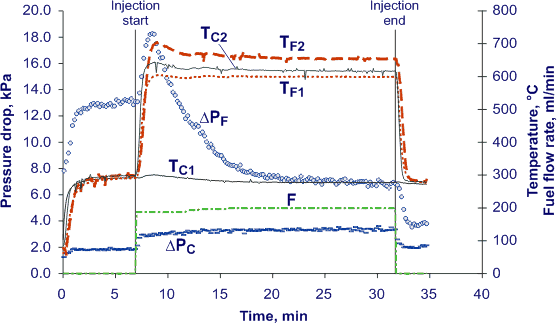
Active regeneration occurs when exhaust temperatures are too low for passive cleaning. This situation often happens during:
Urban delivery routes
Cold weather operations
Long periods of engine idling
The engine control module (ECM) initiates active regeneration by raising exhaust temperatures. This may involve:
Injecting additional fuel into the exhaust stream
Adjusting engine timing
Increasing exhaust temperature through catalytic reactions
Active regeneration is usually automatic but sometimes requires a parked or manual regeneration cycle.
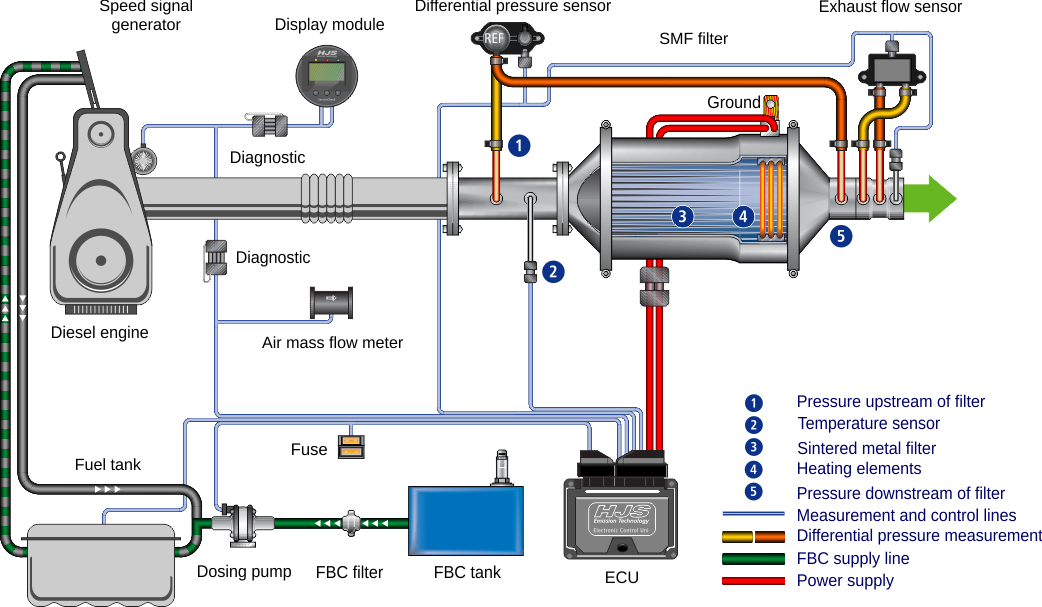
Modern DPF systems rely heavily on sensors and computer monitoring. These components help determine when regeneration is required and ensure safe operation.
Key sensors include:
Differential Pressure Sensor
Measures pressure before and after the filter. Rising pressure indicates soot buildup.
Temperature Sensors
Monitor exhaust heat levels to ensure regeneration occurs safely and effectively.
The ECM continuously analyzes this data to maintain the balance between filtration efficiency and engine performance.
DPF performance in Canada is influenced by unique regional challenges.
Cold temperatures reduce exhaust heat and increase soot accumulation. Vehicles operating in northern provinces or during winter months often require more frequent regeneration cycles.
Municipal fleets, construction equipment, and delivery trucks often operate under low-load conditions. These environments reduce passive regeneration opportunities and increase DPF maintenance requirements.
Highway driving, common in cross-provincial transport, supports consistent passive regeneration and typically extends DPF service intervals.
While soot can be burned during regeneration, ash cannot. Ash comes from engine oil additives, engine wear metals, and fuel contaminants.
Over time, ash builds up inside the filter and reduces its capacity. Professional cleaning or replacement is eventually required. Proper maintenance schedules are critical for maximizing filter lifespan and minimizing downtime.
Many Canadian technicians prefer quick visual explanations combined with technical reading. The following video provides a clear overview of DPF operation and regeneration:
Recommended Video:
https://www.youtube.com/watch?v=hL8-en7kjF4
A Diesel Particulate Filter is far more than a simple emissions component. It is an integrated system combining ceramic filtration, sensor monitoring, and electronic control strategies.


