
Through advanced filtration technology and high - quality materials, we ensure that our DPFs meet the most stringent environmental standards helping to improve air quality and protect the environment.
Through advanced filtration technology and high - quality materials, we ensure that our DPFs meet the most stringent environmental standards helping to improve air quality and protect the environment.

Modern diesel fleets across the United States and Canada face strict emissions standards, rising fuel costs, and growing uptime demands. One of the most important components helping fleets meet these challenges is the Diesel Particulate Filter (DPF), working alongside the catalytic converter to control exhaust pollution.
Understanding the scientific principles behind DPF filtration efficiency helps fleet buyers choose better components, reduce maintenance costs, and improve vehicle reliability.
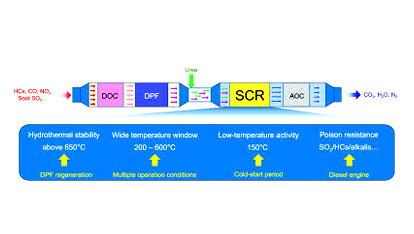
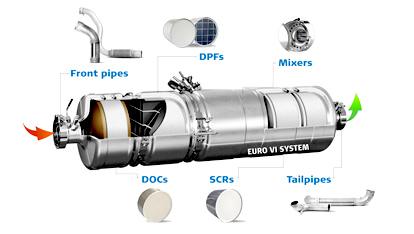
A heavy-duty diesel exhaust system typically includes three major emissions components:
Diesel Oxidation Catalyst (DOC) – Acts like a catalytic converter. It converts harmful gases and creates heat for the DPF.
Diesel Particulate Filter (DPF) – Captures soot particles produced during diesel combustion.
Selective Catalytic Reduction (SCR) – Removes nitrogen oxide emissions using DEF fluid.
The DPF is often described as a wall-flow filter, meaning exhaust gases must pass through tiny porous walls that trap soot particles while allowing clean gas to exit.
DPF filtration efficiency refers to how effectively the filter captures soot particles. Most modern heavy-duty DPF systems capture 85–98% of particulate matter, depending on design and operating conditions.
Three main scientific principles control filtration performance.
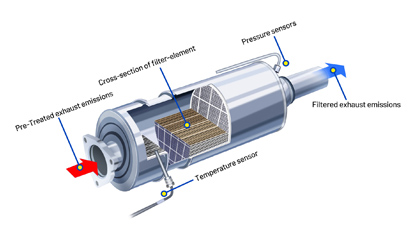
Mechanical filtration is the first stage of soot capture. The DPF contains thousands of small channels arranged in a honeycomb pattern.
Here’s how it works:
Exhaust gas enters open channels.
The opposite channel ends are plugged.
Exhaust gas is forced through porous ceramic walls.
Soot particles remain trapped in the wall structure.
This process is similar to how a coffee filter separates grounds from liquid.
Most DPF filters are made from:
Cordierite (cost-effective, common)
Silicon Carbide (stronger, higher heat tolerance)
The pore size, wall thickness, and channel density directly affect filtration efficiency and exhaust flow resistance.
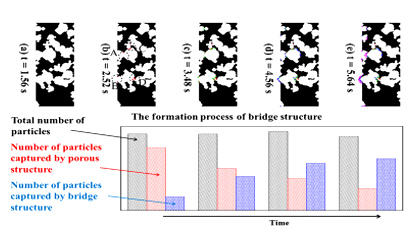
Not all soot particles are large enough to be caught by physical filtering alone. Some are extremely small and require additional scientific processes.
Tiny soot particles move randomly in exhaust gas due to heat and molecular motion. This random movement increases the chances of particles contacting filter walls.
As exhaust gas flows around filter channels, soot particles follow airflow paths. When particles pass close enough to the filter wall, they stick to it.
Together, diffusion and interception allow DPF systems to capture even microscopic particles that mechanical filtration might miss.
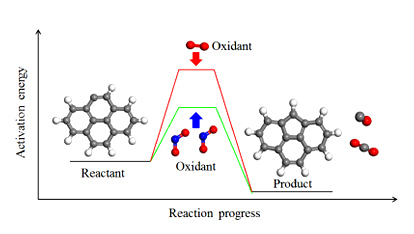
Catalytic converters play a major role in improving filtration efficiency over time.
The DOC performs oxidation reactions that:
Convert hydrocarbons into carbon dioxide
Convert carbon monoxide into safer gases
Generate nitrogen dioxide (NO₂)
Nitrogen dioxide is especially important. It helps burn soot at lower temperatures, improving passive regeneration performance and maintaining filter efficiency.
Many DPF filters also include catalytic coatings that help soot oxidize more efficiently during regeneration cycles.
Fleet managers should monitor early warning signs including:
Increased regeneration frequency
Higher fuel consumption
Rising exhaust backpressure readings
Dashboard warning lights
Loss of engine performance
Monitoring telematics and ECM data helps fleets detect problems before failures occur.
Canadian winter driving conditions often increase soot buildup due to extended idling and lower exhaust temperatures.
Fleets operating in North America face strict regulatory requirements, and high-quality DPF systems help maintain compliance while controlling operating costs.
DPF filtration efficiency is not just about trapping soot. It combines mechanical filtering, particle diffusion, and catalytic chemical reactions working together to keep diesel engines clean and efficient.
Fleet buyers who understand these scientific principles are better equipped to select reliable suppliers and build long-term cost savings into their operations.


