
Through advanced filtration technology and high - quality materials, we ensure that our DPFs meet the most stringent environmental standards helping to improve air quality and protect the environment.
Through advanced filtration technology and high - quality materials, we ensure that our DPFs meet the most stringent environmental standards helping to improve air quality and protect the environment.

For fleet managers across the United States and Canada, the diesel emissions system has become one of the most important parts of a modern truck.
Stricter environmental rules, longer truck lifecycles, and rising maintenance costs mean that DPF systems and catalytic converters are no longer just regulatory components — they are operational assets.
Understanding how these technologies work in the broader global DPF market helps fleet buyers make better decisions about maintenance, suppliers, and replacement parts.
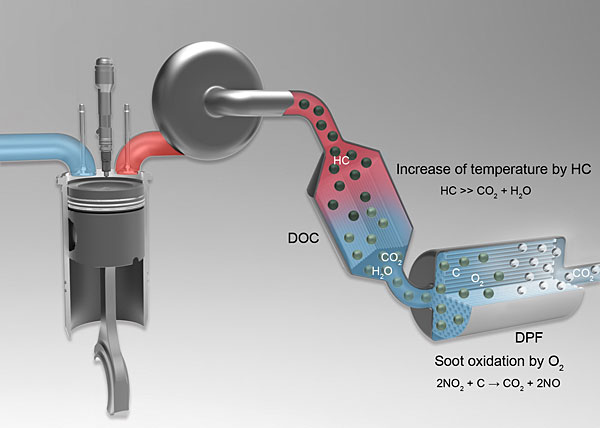
The Diesel Particulate Filter (DPF) market has grown rapidly over the last decade. Governments around the world continue tightening emissions standards to reduce air pollution from diesel engines.
Key drivers of this growth include:
stricter emissions regulations
growth in heavy-duty transportation
expansion of diesel equipment in construction and logistics
stronger enforcement of emissions compliance
In North America, regulations such as EPA heavy-duty emissions standards have pushed truck manufacturers to install more advanced aftertreatment systems.
For fleets, this means that the emissions system is now one of the most complex and important systems on the truck.
Modern diesel trucks use a multi-stage emissions system designed to remove pollutants before they leave the exhaust pipe.
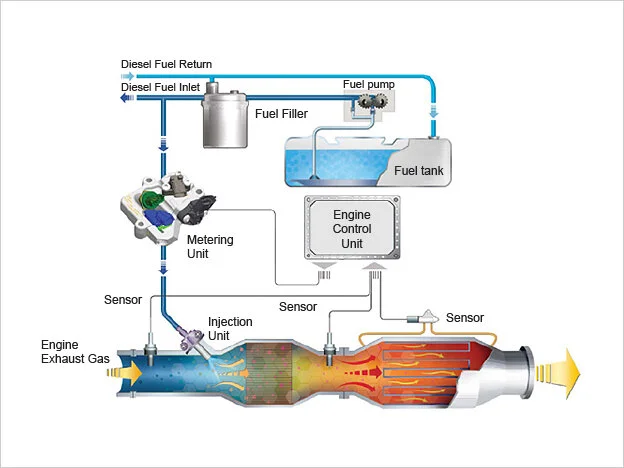
The system usually includes three main components:
Component | Function |
DOC – Diesel Oxidation Catalyst | Converts hydrocarbons and carbon monoxide |
DPF – Diesel Particulate Filter | Captures soot particles |
SCR – Selective Catalytic | Reduces nitrogen oxide emissions |
The catalytic converter plays a critical chemical role.
It uses precious metal catalysts such as platinum and palladium to trigger reactions that convert harmful gases into less harmful compounds.
Just as important, catalytic reactions help raise exhaust temperatures, which supports the DPF regeneration process that burns accumulated soot.
Without effective catalytic performance, the DPF can clog faster.
In the modern emissions system, catalytic converters directly influence fleet performance.
High-quality catalysts help maintain the temperatures needed to burn soot.
Better catalytic performance reduces the frequency of forced regenerations.
Proper catalyst function ensures trucks meet emissions requirements.
Reliable emissions components mean fewer unexpected breakdowns.


